


Quest Supports Rapid Recovery at Adanac Park
An extreme loss of clinical capacity
On 1 February 2026, a major electrical fire broke out in the West Wing of University Hospital Southampton’s General Hospital, causing significant damage to the hospital’s endoscopy facilities.
More than 500 patients were evacuated as the fire was brought under control, while the loss of the endoscopy unit created an immediate challenge for the Trust. Several wards were affected, procedures were postponed and diagnostic appointments had to be relocated to neighbouring facilities.
The disruption was particularly significant for endoscopy services. Emergency, inpatient and therapeutic procedures continued using repurposed hospital spaces, while other diagnostic services were delivered across alternative locations as UHS worked to maintain patient care.
The incident created an urgent need to restore clinical capacity while the fire-damaged area remained unavailable.
A solution
UHS responded by introducing temporary mobile endoscopy facilities as part of its wider recovery programme.
The first stage saw two mobile endoscopy units installed at Southampton General Hospital, with the first patients treated in the facilities on 13 April, just ten weeks after the fire. UHS described the return of patients requiring diagnostic tests as a significant milestone in the Trust’s recovery. (University Hospital Southampton)
However, the recovery required further capacity.
Work subsequently progressed at Adanac Health and Innovation Campus, beside the M271, where three additional mobile endoscopy units were planned. UHS said the additional units would help increase the overall capacity and efficiency of the service while the Trust worked towards creating a permanent new home for endoscopy. (University Hospital Southampton)
Turning an empty site into clinical capacity
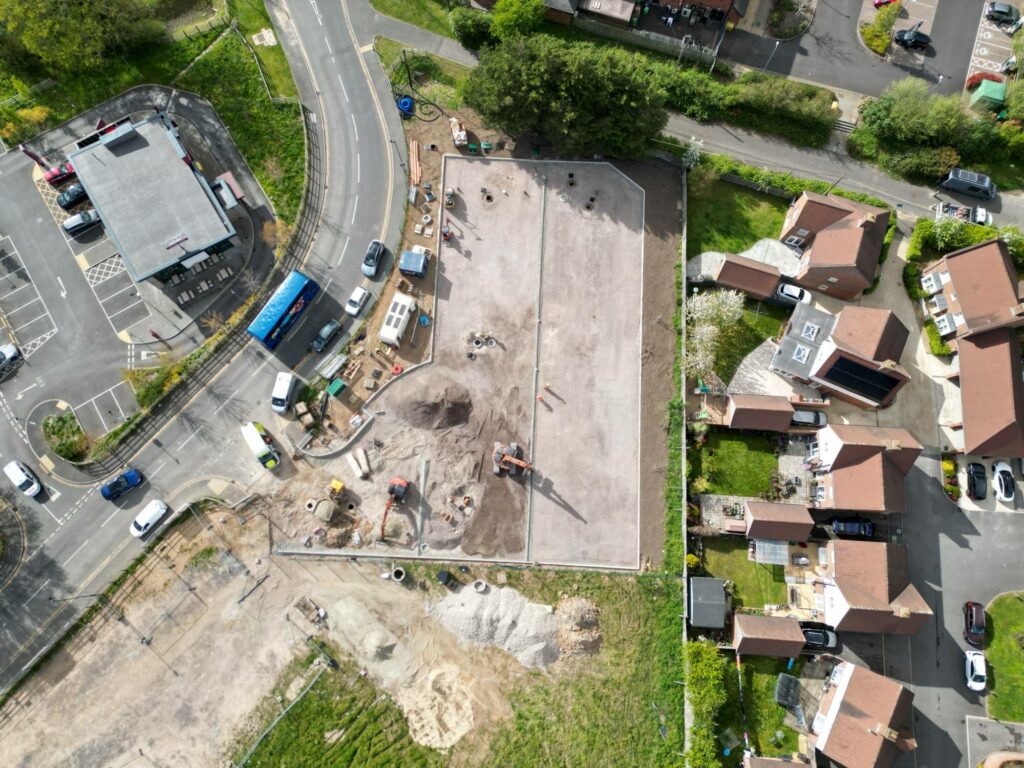
The Adanac Park project presented a different challenge from the initial hospital-site installation.
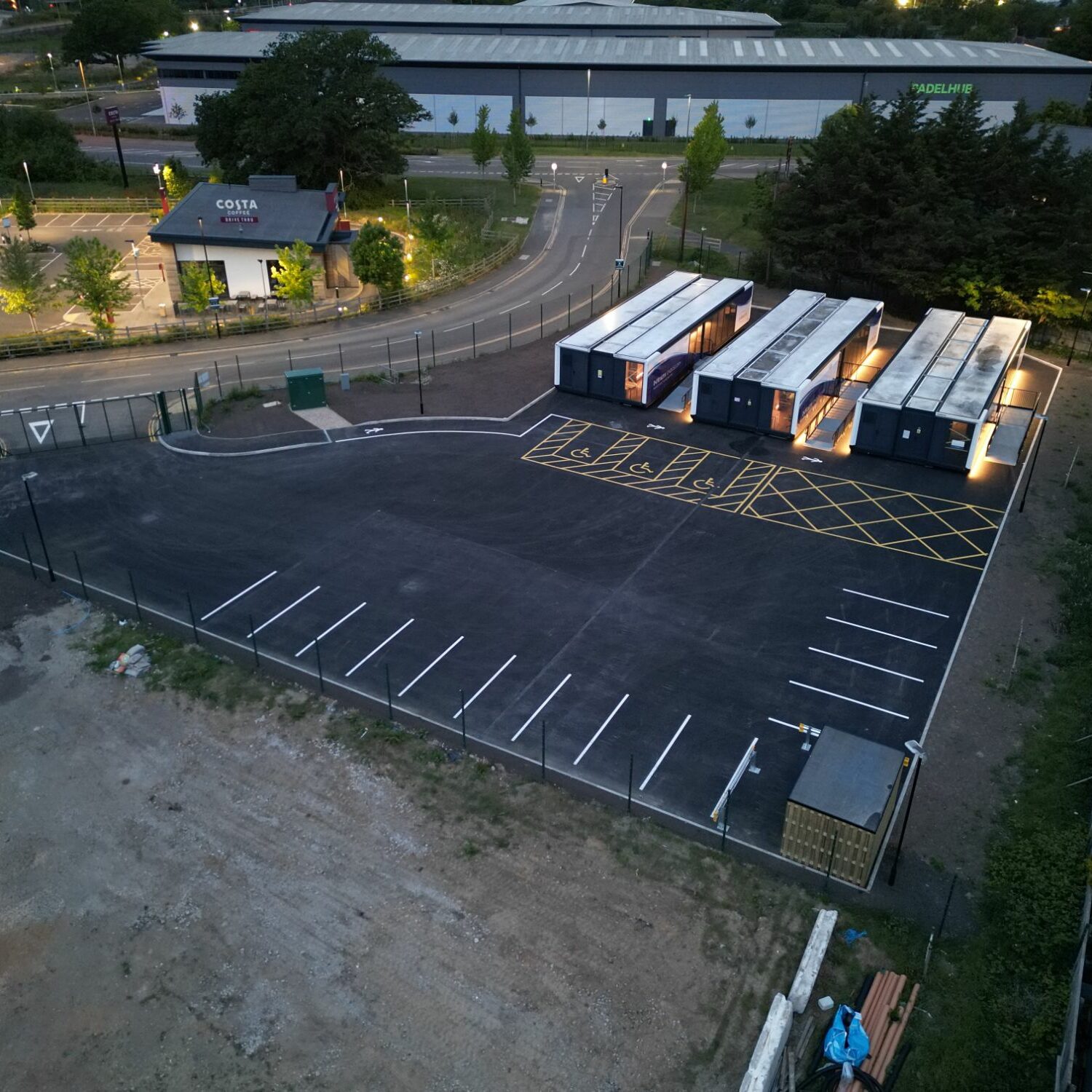
Three specialist mobile units were to be positioned on Plot 5 at the Adanac Health and Innovation Campus. But before the units could become operational, the site itself needed to be prepared.
UHS’s Trust Board papers described the Adanac installation as the more complex phase of the work, requiring concrete pads together with water and power connections on which the units could be installed. At the time of the 14 May Trust Board meeting, the estimated completion date was late May. (University Hospital Southampton)
This was therefore not simply a case of delivering mobile clinical units to an available site. The project required the creation of the infrastructure necessary to support a functioning healthcare facility.
Quest Medical’s role
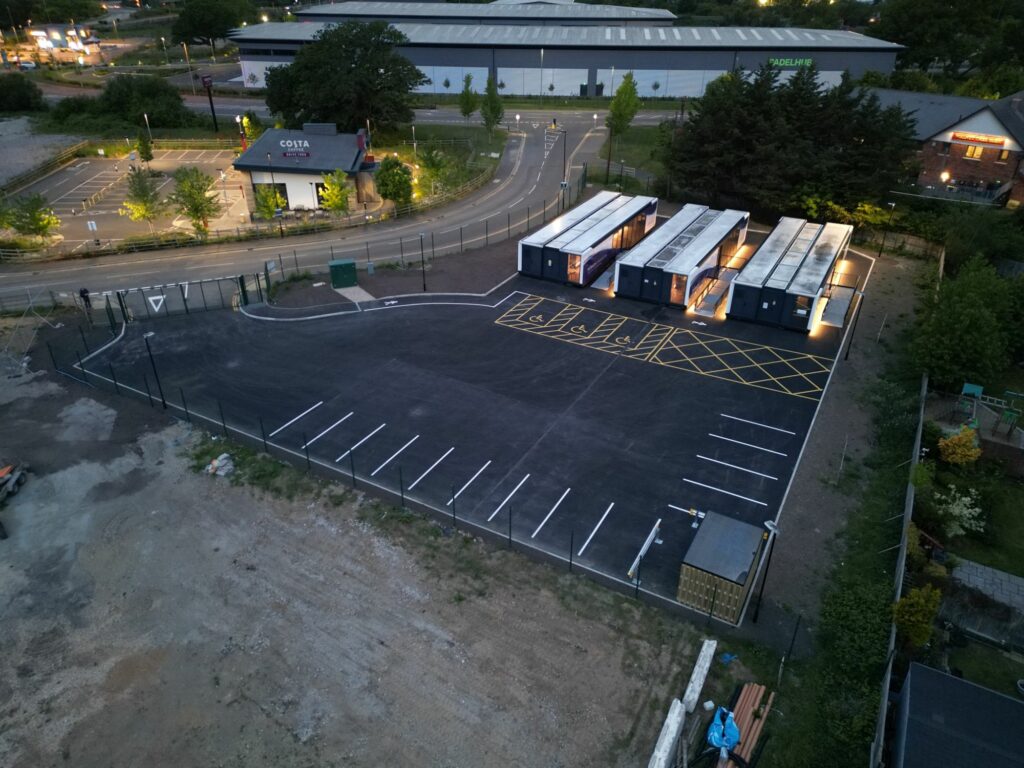
This is where Quest Medical played a key role in the delivery of the Adanac Park facility.
The specialist clinical units were provided by InHealth. Unlike conventional temporary buildings, the units are expandable clinical environments designed to provide dedicated procedure, reception, waiting and recovery spaces.
Quest Medical’s role centred on the infrastructure, construction and engineering required to establish the facility.
Quest managed the site construction and installation of the three InHealth units, including the preparation of the site and the complex operations required to position and support the units.
The project involved working alongside healthcare developer Prime plc and InHealth as part of a collaborative delivery model, bringing together the clinical facilities and the infrastructure needed to make them operational.
The scale of the work is significant: an undeveloped plot had to be transformed into a site capable of supporting specialist healthcare facilities, with the necessary foundations, utilities and installation works completed around the mobile units.
Engineering under pressure
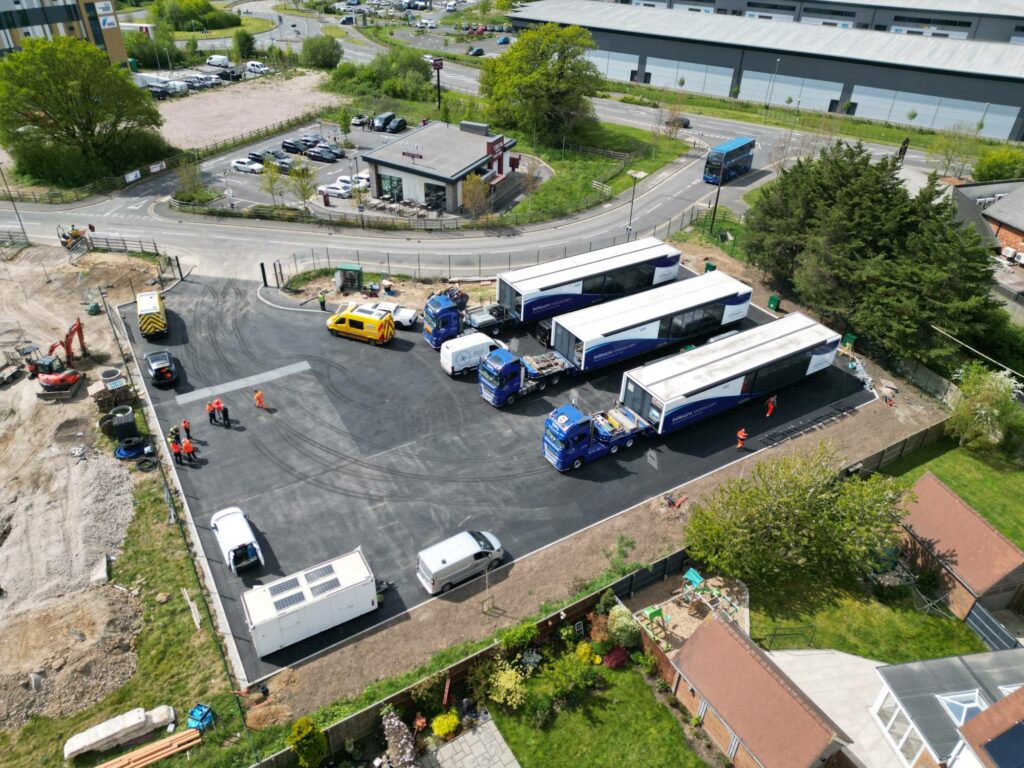
The project demonstrates the importance of infrastructure behind temporary healthcare facilities.
InHealth’s units provide the clinical environment, including procedure rooms, recovery areas and specialist decontamination facilities. But those facilities depend on the surrounding site infrastructure to operate safely and effectively.
Quest’s work therefore formed a critical part of the chain between the initial decision to create additional temporary capacity and the eventual delivery of a functioning clinical service.
The project also required careful coordination between site preparation, utility installation, delivery and positioning of the specialist units.
With the NHS responding to the loss of a major clinical department, the priority was not simply to complete a construction project. It was to help restore healthcare capacity as quickly and effectively as possible.
Designed around patient need
The purpose of the Adanac facility is ultimately patient care.
Prime’s project information explains that endoscopy provides vital diagnostic services, helping clinicians identify conditions including cancer, inflammation and internal bleeding, while also supporting interventions such as biopsies and polyp removal. (Prime plc)
The three Adanac units were therefore planned as part of a wider solution to consolidate endoscopy services between Adanac Park and Southampton General Hospital, increasing capacity and efficiency while the permanent service is developed. (Prime plc)
The planned facility is designed to operate seven days a week, with 15 UHS staff and an anticipated 24 patients attending each day. (Prime plc)
That means the infrastructure delivered at Adanac Park has a direct relationship with the Trust’s ability to provide diagnostic care to patients affected by the fire and to manage demand during the wider recovery.
From emergency response to long-term recovery
The Southampton General Hospital fire created a situation in which clinical capacity was lost almost overnight.
The response required the NHS and its partners to work quickly: relocating services, repurposing existing hospital space and developing temporary facilities while permanent plans were put in place.
The first two mobile units restored an element of endoscopy provision at Southampton General Hospital in April. The three additional units at Adanac Park form the next stage of that recovery, providing further capacity and efficiency while the Trust works towards a permanent solution. (University Hospital Southampton)
For Quest Medical, the Adanac project demonstrates the role that specialist infrastructure and engineering can play in an urgent healthcare response.
By managing the site construction and installation of the three InHealth units, Quest helped turn a site into a functioning environment for specialist healthcare, supporting UHS as it works to recover from one of the most significant disruptions to its services in recent years.
A collaborative response to an exceptional challenge
The project is ultimately a story of collaboration.
UHS faced the immediate loss of vital clinical space. InHealth provided the specialist mobile endoscopy facilities. Prime supported the development of the Adanac site. Quest provided the construction and engineering expertise required to prepare the site and install the units.
Together, these elements enabled a temporary healthcare facility to be developed as part of UHS’s wider recovery programme.
What began with the loss of a critical hospital service has therefore led to a rapid and coordinated response focused on restoring, and ultimately increasing, clinical capacity.
For Quest Medical, the project represents more than the delivery of infrastructure. It demonstrates how quickly specialist engineering and construction expertise can be mobilised when the requirement is urgent, the environment is complex and the outcome directly affects patient care.