


Beyond Standard Logistics: Quest Delivers a Complex Hospital Relocation
Relocating specialist medical equipment can present significant logistical challenges, particularly when the surrounding environment leaves little room for error.
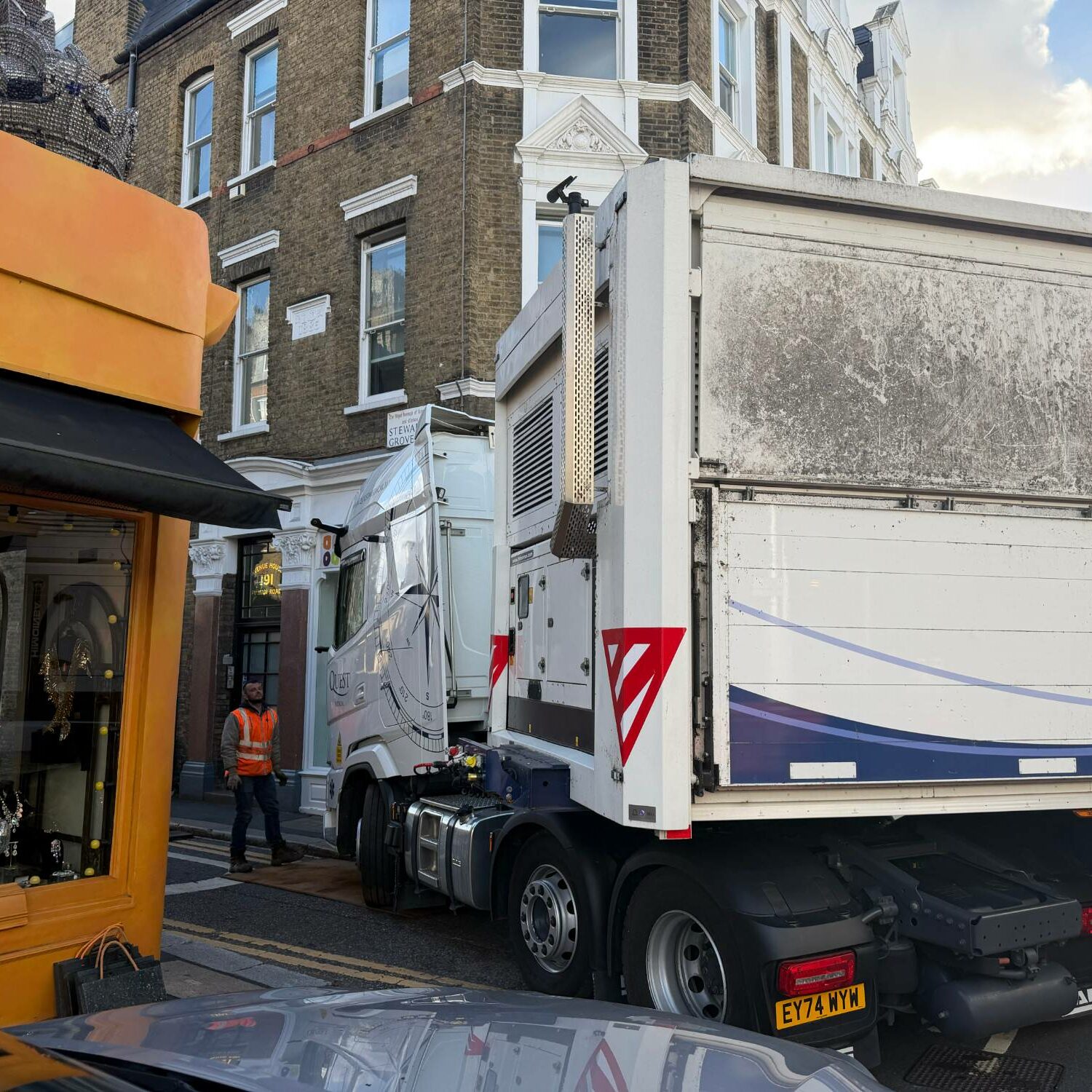
A recent project at The Royal Marsden required extensive planning, specialist equipment and careful coordination to remove an oversized mobile PET-CT scanner from a confined hospital access route onto Fulham Road.
The mobile unit, roughly three metres longer and 0.4 metres wider than the standard, was positioned along Stewarts Grove, at the rear of the hospital. Its size, combined with the tight junction and adjacency to a busy London road, made the removal particularly complex.
Preparation began well ahead of the operation, with a site survey including LiDAR scanning to create a 3D model of the access route, alongside structural surveys of Stewarts Grove. This information was used to recreate the junction at Heyford Park, allowing Quest to test the manoeuvre before the operation.
The operation also required a planned closure of Fulham Road, involving coordinated traffic diversions, pedestrian arrangements and the rerouting of bus services. This element alone required three months of planning.
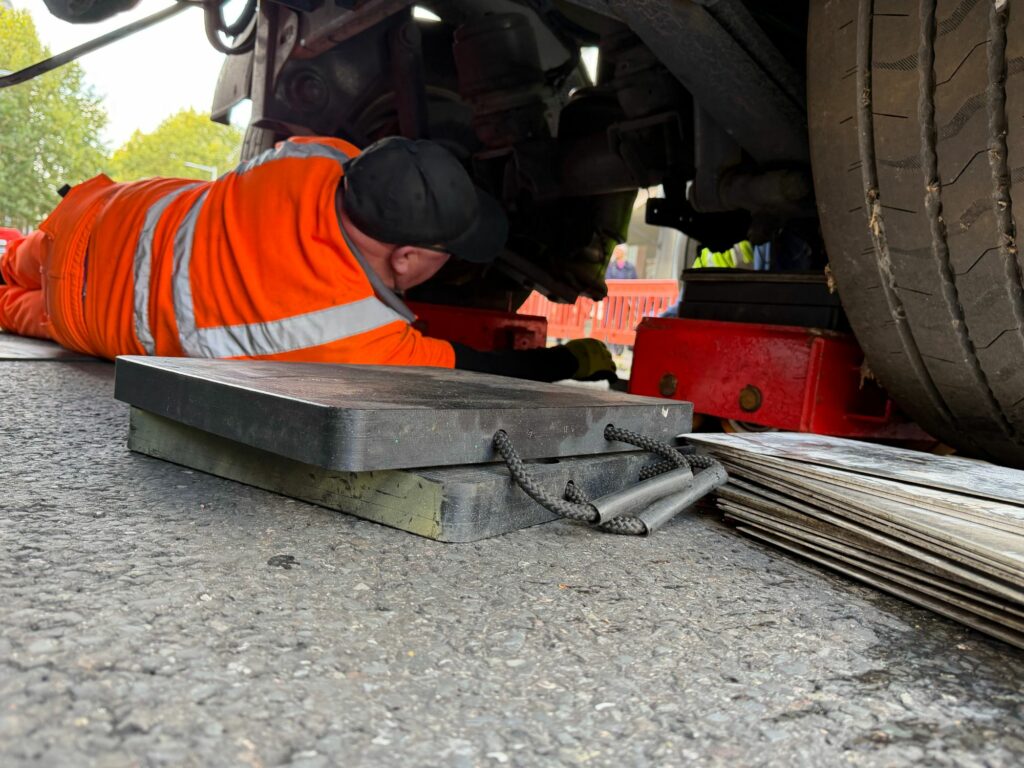
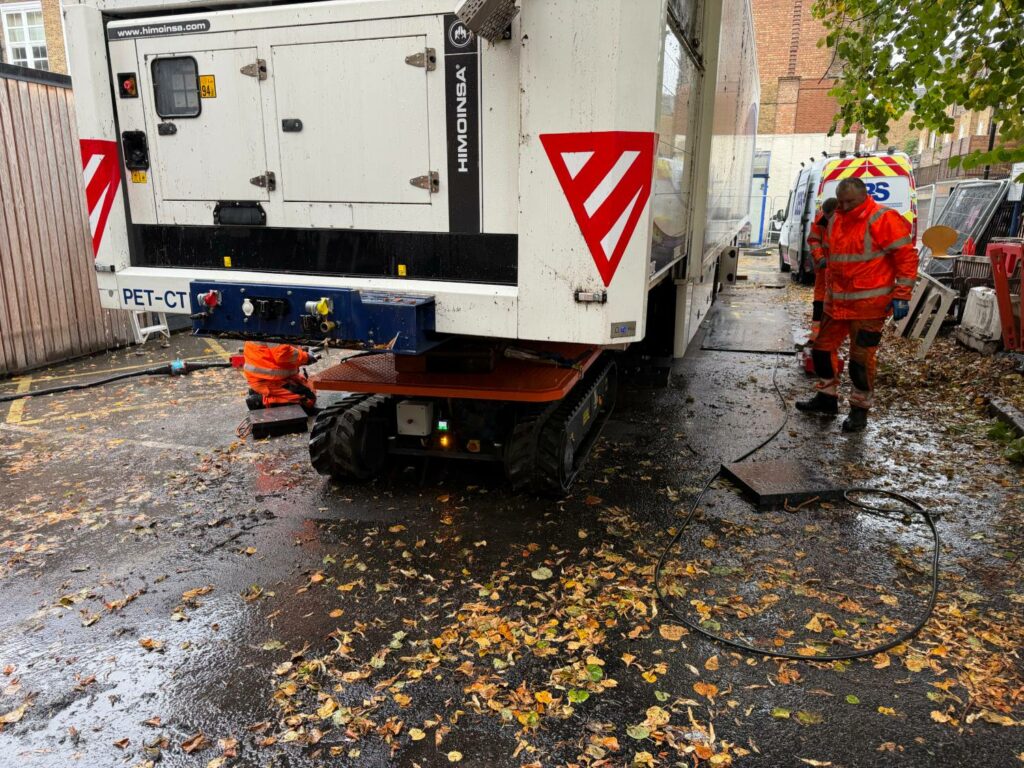
With the mobile unable to negotiate the turn independently, Quest deployed a specialist skating system to manoeuvre the rear of the unit around the junction, allowing the tractor unit to guide it along Stewarts Grove. Once inside the hospital compound, winching equipment was used to pull the mobile into its final position. The removal operation required the process to be carefully reversed, winching the unit back to a position where the tractor could reconnect.
Despite the considerable logistical and technical demands, the operation was completed as planned, within the allocated road closure window.
For Nick Michael, who led the project, the approach comes down to a simple principle: “There is always a way.” The project reflects Quest’s commitment to finding solutions in challenging environments, combining detailed planning, specialist equipment and practical problem-solving where conventional logistics are not enough.